The divide arrives,
and it’s standing face-to-face.
For a while, it was possible to keep both directions in motion.
The life that functions.
The life that feels aligned.
Not as abstract ideals — as lived realities.
The job that funds the dream but drains the spirit.
The partnership that stabilizes the structure but limits expression.
The role played publicly versus the truth held privately.
They could coexist under compression.
The field held the difference. Momentum blurred the discrepancy.
As long as nothing moved too quickly, the gap could be managed.
That management is thinning, and it’s deliberate.
Friction increases. Progress slows.
Energy disperses where it once flowed cleanly.
The atmosphere grows dense enough to feel.
The trek toward the eclipse is gradual at first — subtle irritations, miscalculations, friction rubbing raw what barely used to register.
Progress feels uneven. Conversations loop. Decisions stall.
This isn’t collapse or crisis – it’s concentration.
Catalysts appear. Big-ticket issues resurface. Conflicts that were deferred find their way back to the table. And just as quickly, attempts to resolve them bog down. Messages cross. Agreements tangle. Forward motion feels like walking through mud.
Sleep shifts. Patience shortens. The air itself somehow feels impossibly heavy as rising pressure becomes palpable.
Holding these past weeks was not hesitation. It was timing.
Support was reorganizing beneath the surface.
Movement before that restructuring would have forced a false choice.
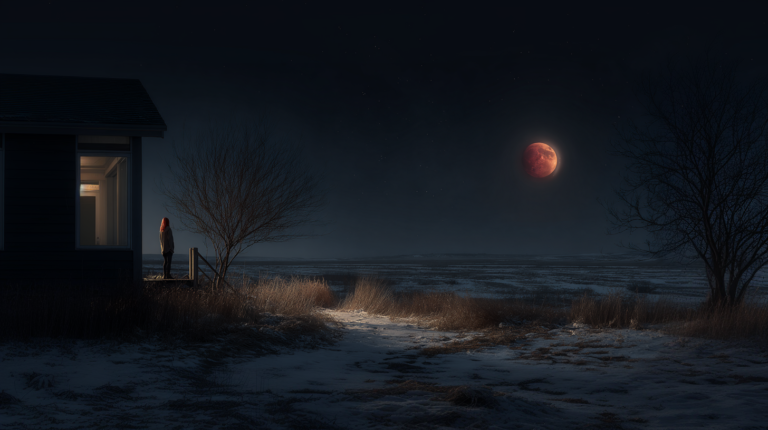
By the time the blood moon stands overhead, the divide is unmistakable:
Personal authenticity.
Collective responsibility.
This face-to-face event marks the moment — the time to choose.
Some will choose a side. It’s cleaner. More comfortable.
Self without obligation.
Obligation without self.
But there are those who will not accept the compromise.
Those who understand that comfort can become a cage.
They choose what’s more difficult than either extreme — balance.
The Gate opens in the space between.
Under the blood moon, the question shifts in shadow.
It is no longer whether to leave misalignment.
It is whether what is being built can carry both truth and responsibility without distortion.
Obligation and self, in balance.
Forged under pressure.
— Bríx