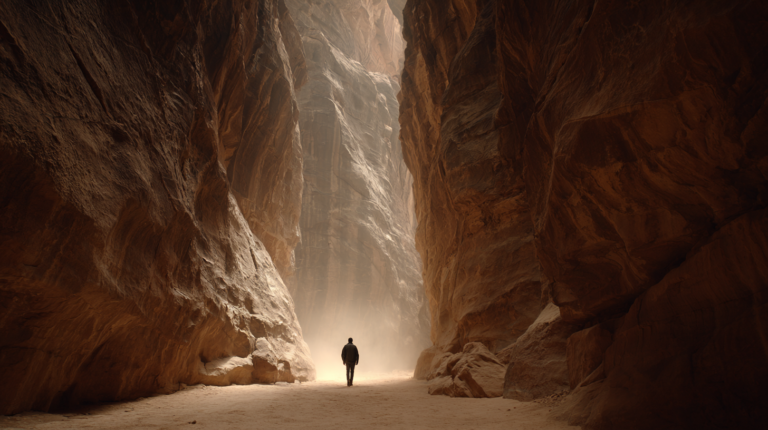
There’s a particular discomfort
when motion returns after constraint.
Not panic. Not relief.
A quieter tension — the kind that comes from realizing that stillness is no longer an option, but clarity hasn’t arrived either.
When movement resumes, it doesn’t do so politely. It doesn’t wait for readiness or coherence. It doesn’t ask whether the conditions are ideal. Motion simply returns to the environment, and whatever hasn’t been resolved is carried forward with it — not as a problem to be fixed, but as part of the load.
This is where choice becomes unavoidable.
Not the dramatic kind. Not declarations or pivots. The smaller, less theatrical choices: what keeps pace, what lags, what gets dropped without ceremony.
When everything was stuck, delay blended in.
When movement resumes, delay becomes visible
— not because it’s wrong, but because it no longer matches the tempo.
Comfort has a way of disguising itself during slow periods. It presents as patience, prudence, or restraint. But when conditions shift, that same comfort begins to function as drag. What once felt like holding steady starts to feel like resisting motion.
The difference isn’t moral. It’s mechanical.
This is also where consequence sharpens — not through punishment, but through mismatch. When the field is moving, anything out of alignment doesn’t explode; it simply fails to travel well.
Friction increases. Energy leaks. Attention fragments.
The cost isn’t immediate catastrophe — it’s inefficiency, repetition, and quiet exhaustion.
There’s no requirement here to be decisive in the heroic sense. What’s required is honesty about what can actually move with you. Some things will. Some won’t. Carrying what doesn’t becomes harder to justify.
It’s tempting, at moments like this, to wait for certainty.
To hold off until the path feels cleaner, the timing more generous, the signals more legible. But motion doesn’t reward waiting for permission. It responds to congruence. What aligns travels more easily. What doesn’t accumulates weight.
This isn’t about acceleration for its own sake. Speed without coherence collapses quickly. But neither is it about preserving every structure simply because it once served you.
The field isn’t asking for faith or optimism. It’s asking for discernment — the kind that recognizes when comfort has outlived its function.
Motion has resumed.
The question isn’t whether you move.
It’s what you carry forward with you.
Forged under pressure.
— Bríx